October 28, 2026 · By SP Fabrication
Commercial Materials and Finishes: How to Choose for Durability
Laminate, veneer, solid wood, lacquer, solid surface: how the common commercial materials wear, how they repair, and where each one belongs.
The right material for a commercial interior is the one that still looks acceptable after five years of heavy use, and that can be repaired without closing the room. That is often not the most expensive option. Here is how the common choices compare, based on how they behave in real use rather than on how they look in a sample book.
High-pressure laminate
High-pressure laminate (HPL) is the workhorse of commercial interiors. It resists scratches, stains and heat better than most surfaces at its price, and color stays consistent across long runs and later repeat orders. Horizontal-grade laminate is thicker than the vertical grade, so it is the one to use on worktops and counters. The weak points are its edges and seams. Exposed edges need good banding or a solid lip, and damage to the surface is difficult to repair invisibly, so panels tend to be replaced.
Wood veneer
Veneer gives you real timber with a matched grain across surfaces too wide for solid wood, and it is more dimensionally stable on large panels. How the leaves are matched (book-matched, slip-matched and so on) can change how a wall of panels looks. It suits reception desks, panelling and executive furniture. A veneer can only be sanded lightly, so a tough top coat matters where the surface is handled regularly.
Solid wood
Solid wood is warm, can be refinished more than once and ages well. It also moves with humidity, which matters a great deal in wide tops and in buildings with heating that swings between seasons. Designs have to allow for that movement, for example with fasteners that let a top expand across its width. It is excellent for table tops, edge details and bar rails, and less suited to very large flat panels.
Painted MDF
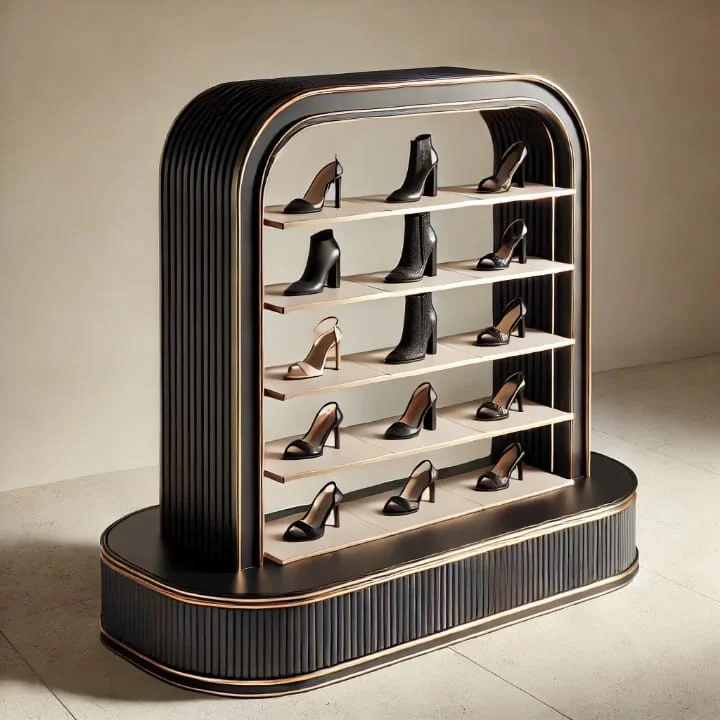
MDF is stable and machines cleanly, which makes it the usual material for reeded and fluted fronts, arches and sculptural shapes. Painted finishes can be touched up in place, which is a real advantage in a busy store or lobby. The tradeoff is that raw MDF dislikes water, so the lower edges near mopped floors need to be sealed properly or protected with a base detail. Moisture-resistant grades are available for damp locations.
Lacquers and clear coats
A catalyzed lacquer or conversion varnish gives a harder surface than a typical household finish, and it stands up better to commercial cleaning. Gloss level changes how much wear you see: high gloss shows every fingerprint and fine scratch, whereas a satin or matte sheen hides day-to-day use. For a high-touch surface, choose the finish you can maintain, not simply the one in the render.
Solid surface, quartz and stone
Solid surface can be thermoformed into curves and repaired by sanding, making it a good choice for curved counters. Quartz resists staining and scratches, although it is not as tolerant of direct heat. Natural stone offers unique character but usually needs sealing, and some marbles etch on contact with acids such as wine and citrus. All of these are heavy, so the structure beneath has to be designed for the load and kept level.
Upholstery
Check the rub rating, the cleaning code and the backing. Contract vinyl and performance fabrics handle spills well, and channel-tufted backs add wear points at each seam. Ask how a section can be replaced, since re-covering a single seat is much cheaper than replacing a whole booth.
Choosing for your project
Match each material to the surface, not to the whole room. A durable laminate worktop can sit on a reeded front, and a timber bar rail can sit on a laminate die wall. If you are weighing up options, send us the drawings or a rough brief through our quote form and we will tell you which we would use, and why. See also our guide to solid wood and MDF.